
Italian Government Scholarships (MAECI): Fully Funded Masters and PhD in Italy
The Italian Government Scholarship, run by the Ministry of Foreign Affairs and International Cooperation (MAECI), pays a fixed grant of 10,800 euros for nine months of master’s or PhD study at a public or legally recognized private institution in Italy. The 2026-2027 call closed on 26 March 2026, and the 2027-2028 call has not been published yet. Before you plan around this award, read the eligibility list, because selection is based on citizenship and each annual call publishes its own list of eligible countries on the Study in Italy portal. The 2026-2027 list did not include Pakistan, so Pakistani readers must check the new list when the next call opens.
1. Introduction
The Italian Government Scholarship is one of the oldest state-funded awards in Europe. The Ministry of Foreign Affairs and International Cooperation, known as MAECI, offers grants to foreign citizens and to Italian citizens living abroad, under Italian Law 288/55 and its later amendments. The stated purpose is to foster international cooperation in cultural, scientific, and technological fields, to promote the Italian language and culture, and to support Italy’s economic system in the world.
Quick Facts
| Scholarship Name | Italian Government Scholarship (MAECI) |
|---|---|
| Host Country |  Italy |
| Host University | Any eligible Italian university |
| Study Level | Master’s, PhD, AFAM, research, Italian language courses |
| Funding Type | EUR 10,800 for nine months (2026-27), paid in three installments; MAECI health insurance |
| Eligible Nationalities | Selected countries; Pakistan was absent from the 2026-27 list |
| Study Duration | 6-9 months (varies by program) |
| Application Deadline | 26 March 2026, 14:00 CET (2026-27 cycle, closed). Next call dates not announced yet. |
| Scholarship Year | 2027-28 |
| Official Website | studyinitaly.esteri.it/ListaBandi |
The award is a grant, not a full cost-of-living package. For the 2026-2027 academic year it paid 10,800 euros in total for nine months, in three installments, plus collective health insurance. Tuition is not covered automatically. Some universities exempt scholarship holders from tuition under Italian law, but that is the university’s decision, and MAECI does not reimburse tuition fees. You need to understand that gap before you apply, because the grant alone does not pay for everything.
Applications go only through the Study in Italy portal. There is no paper form, no email application, and no agent route. The 2026-2027 call was published on 13 March 2026 and closed at 14:00 Italian time on 26 March 2026, a window of less than two weeks. The 2027-2028 call has not been published yet. Based on the pattern of past calls, it is expected in early spring 2027, but MAECI has confirmed no date. Do not plan around a specific day until the official call is published.
The most important fact for readers of this site is the country list. Selection is based on citizenship, and each annual call comes with its own list of eligible foreign countries, published on the Study in Italy portal. The companion list for the 2026-2027 call did not include Pakistan. That means Pakistani nationals could not apply in that round. Country lists change from year to year, so the position may be different when the 2027-2028 call opens, but you must check the list published with the new call before you collect documents. Do not rely on older blog posts that list Pakistan as eligible, because they may be quoting an older call.
2. Types of Scholarship
MAECI offers grants for six kinds of study and training. The categories below are from the 2026-2027 call. The next call may keep the same categories or change them, so confirm the list when it is published.
- Master’s degree (Laurea Magistrale, second cycle): A two-year master’s degree at a public or legally recognized private Italian institution. The grant covers nine months and can be renewed for the second year, subject to academic progress.
- PhD program: A doctoral program at an Italian institution. The grant covers nine months and can be renewed for the following years of the doctorate.
- Higher Education in Arts, Music and Dance (AFAM): Programs at Italian academies and conservatories. The grant covers nine months and follows the same age limit as the master’s track.
- Research under academic supervision: A research project carried out at an Italian university or research institution under a named supervisor. The grant covers nine months.
- Italian language and culture courses: A three-month course in Italian language and culture. The grant for this track is 3,600 euros, paid in a single installment.
- Bachelor’s degree, renewal only: First-year bachelor’s applications are not accepted. Only students who already hold a MAECI grant for a bachelor’s program can renew it.
All awards are for onsite attendance in Italy only. Online programs and study outside Italy are excluded. The scholarship does not replace university admission, pre-enrollment through the Universitaly portal, or the student visa process. You must handle those steps separately, and the grant does not guarantee that any of them will succeed.
3. Degree Level
The MAECI grant funds master’s degrees, PhD programs, AFAM programs, supervised research, and Italian language courses. It does not fund a first-year bachelor’s degree. If you have just finished school and you want a bachelor’s in Italy, this is not the award for you, unless you are renewing an existing MAECI bachelor’s grant.
The standard grant period for master’s, PhD, AFAM, and research awards is nine months. For the 2026-2027 academic year the period ran from 1 November 2026 to 31 July 2027, and the dates could not be deferred. Language courses run for three months. Grants for multi-year programs can be renewed for the following academic year, subject to the conditions in the call and to satisfactory academic progress. Renewal is not automatic, and you must apply for it under the rules of the new call.
The grant is paid into a personal Italian bank account in your own name. You must open that account after you arrive in Italy. The first installment is paid from November, once your presence in Italy and your enrollment have been confirmed by your institution. If you arrive late, the grant is reduced. Full payment applies only if you are in Italy by 15 November. If you arrive on or after 16 November, the grant is cut in proportion to your arrival date, so book your travel to arrive well before that line.
4. Available Subjects
MAECI does not publish a fixed list of subjects. The grant can fund a master’s or PhD in any field offered by a public or legally recognized private Italian institution, as long as you are admitted to the program and you meet the call’s requirements. AFAM awards cover arts, music, and dance programs at recognized academies and conservatories. Research awards cover any field, as long as the project is carried out under academic supervision at an Italian institution.
That freedom is useful, but it also means your admission matters more than the subject. You must hold the academic qualification required to enroll in your chosen program, and you must follow the university’s own admission process. For degree programs, that normally means pre-enrollment through the Universitaly portal and an application to the university itself. The scholarship does not replace any of those steps, and winning the grant does not guarantee admission.
Italian universities are strong across a wide range of fields, and international applicants often choose engineering, architecture, design, economics, business, computer science, medicine and life sciences, humanities, and social sciences. The subject itself does not decide your result. What matters is your academic record, your language preparation, and whether your chosen program and institution fit the profile MAECI is looking for in your country’s selection.
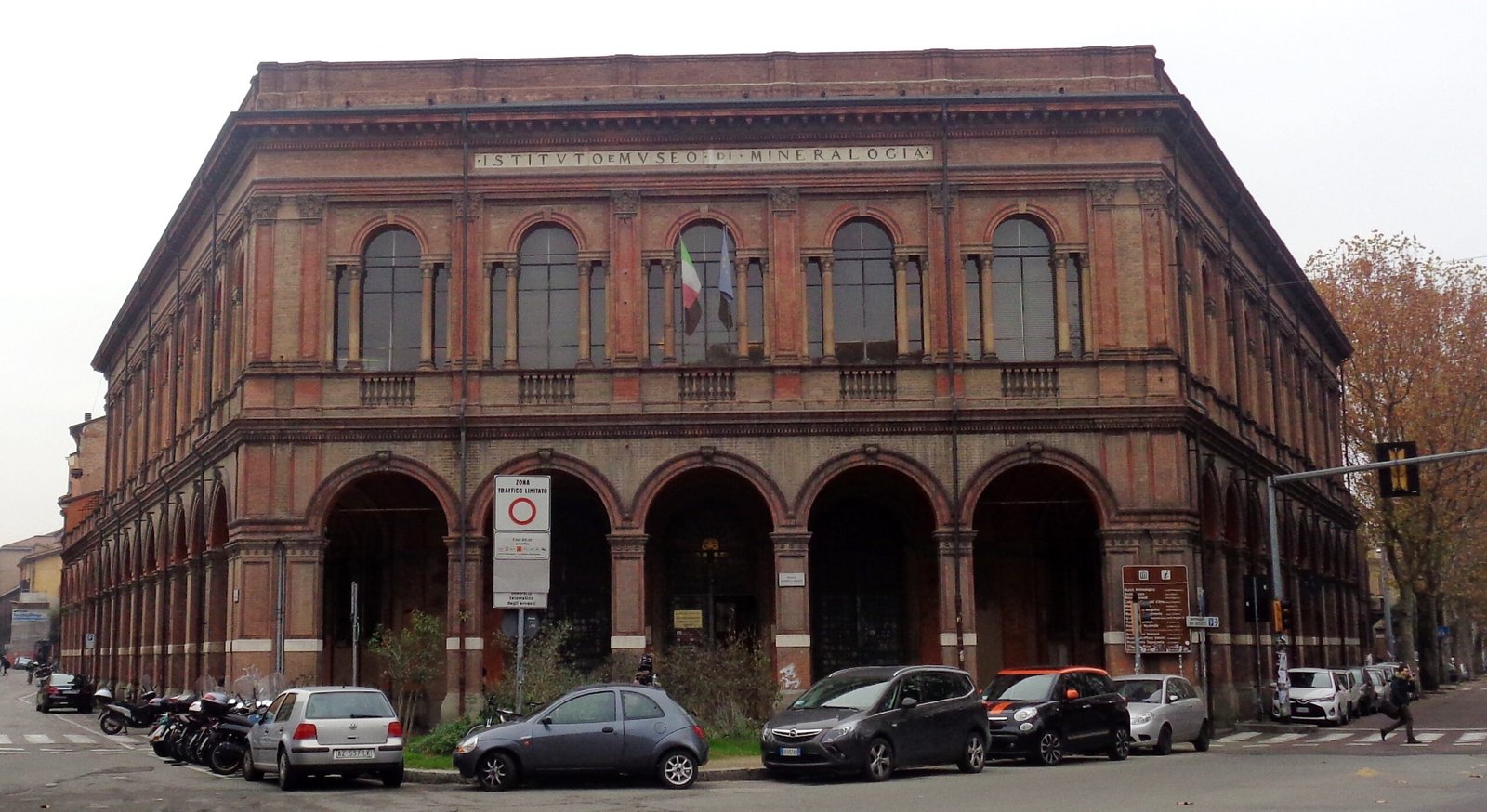
5. Scholarship Benefits
The MAECI grant is a fixed cash award, not a package that pays each cost separately. For the 2026-2027 call the amounts were:
- EUR 10,800 in total for nine-month awards, covering master’s, AFAM, PhD, and research grants. The money is paid in three installments: EUR 5,500 from November 2026, EUR 2,300 from February 2027, and EUR 3,000 from June 2027. The third installment is paid only if you have earned at least 27 university credits (CFU) in that academic year, for master’s and AFAM students. A standard Italian master’s year is 60 CFU, so 27 credits is close to half of a full year’s load.
- EUR 3,600 for the three-month Italian language and culture course, paid as a single installment at the end of the course.
- MAECI collective health insurance, which covers grantees for the grant period. The call provides the insurance, but you should still check what it covers and whether you need extra cover for your own situation.
- Tuition exemption at some universities. Under Italian Legislative Decree 68/2012, universities may exempt scholarship holders from tuition fees. That decision belongs to each university, and not every university grants it. MAECI does not reimburse tuition, so if your university does not exempt you, the tuition comes from your own funds.
The grant is worth about 1,200 euros a month across the nine months, which is a real contribution to living costs in Italy, but it is not enough on its own in expensive cities such as Milan or Rome. Rent, food, transport, and study materials will take most of it, and you should plan to bring your own savings for the first weeks, for the visa process, and for any tuition your university charges. There is no application fee for the MAECI scholarship, and the Ministry states clearly that it will never ask you to share personal information or make a payment by telephone. Anyone who asks you for money to secure this grant is running a scam.
6. Eligible Nationalities
Selection for the MAECI scholarship is based on citizenship. Each annual call publishes its own list of eligible foreign countries, and that list is published on the Study in Italy portal alongside the call text. The list changes from year to year, and the only list that counts is the one published with the call you are applying under.
For the 2026-2027 call, the companion document titled List of Eligible Foreign Countries did not include Pakistan. That is the decisive point for Pakistani readers: under the 2026-2027 documents, Pakistan was outside the eligible set, and a Pakistani national could not apply in that round. Other South Asian countries, including India and Bangladesh, were on the 2026-2027 list, along with countries such as Egypt, Ethiopia, Kenya, Morocco, Turkey, Iran, Iraq, Jordan, and South Africa, but the full list is long and the only safe way to check your own country is to open the list published with the current call.
If a future call adds Pakistan, the Study in Italy portal and the new eligible-countries list will show it. Until then, treat the MAECI government scholarship as unavailable for Pakistani nationality, and check the portal again when the 2027-2028 call is published. Do not force an application against a closed country list, because the portal will not accept it.
A separate track exists for Italian citizens living abroad, known as IRE. Those scholarships are offered only to students who hold Italian citizenship only, and only for residence in a set list of countries: Argentina, Australia, Brazil, Chile, Colombia, Egypt, Ethiopia, France, Germany, Kenya, Lebanon, Morocco, Peru, the United Kingdom, Senegal, South Africa, Spain, Tunisia, Uruguay, and Venezuela. If you hold dual citizenship, Italian and foreign, you may apply only through the selection process of the foreign country, and you must enter your foreign citizenship in the citizenship field on the Study in Italy portal. If you hold more than one foreign citizenship, you may apply for only one selection process, choosing one of the beneficiary countries of which you are a citizen.
7. Eligibility Criteria
MAECI checks eligibility against the rules in the call before any academic assessment takes place. The rules below are from the 2026-2027 call. Always confirm the current rules in the new call before you apply, because MAECI can change the amount, the eligible countries, the dates, and the program categories each year.
- Citizenship: You must be a foreign citizen from a country on the eligible-countries list published with the call, and you must not be residing in Italy. Italian citizens living abroad can apply only under the IRE rules for the listed countries.
- Age, checked on the deadline date: You must be 28 years old or younger on the application deadline for a master’s degree, an AFAM program, or an Italian language course. For the 2026-2027 call that meant being born on or after 27 March 1997. You must be 30 years old or younger for a PhD, which meant being born on or after 27 March 1995. You must be 40 years old or younger for a research project, which meant being born on or after 27 March 1985. You must also be an adult.
- Academic qualification: You must hold the qualification required to enroll in the program you choose. For a master’s degree that means a bachelor’s degree. For a PhD that means a master’s degree or an equivalent qualification. Your qualification must be recognized for enrollment in Italy.
- Language: For master’s and AFAM programs you must show Italian or English at B2 level. For the language course you must show Italian at A2 level. For PhD and research programs the call does not require proof of language, but your university or your supervisor may ask for it.
- One country only: You may apply for one selection process only, through one country of citizenship.
- Onsite study: The scholarship is awarded only for courses attended in person on Italian territory.
The age rule is checked on the deadline date, not on the day your studies start. If you turn 29 the day after the deadline and you are applying for a master’s, you are still within the limit. If you turn 29 on the deadline day itself, you are outside it. Work out your age on the deadline date before you apply, because the portal will not bend the rule.
8. English Language Requirements
The MAECI call sets language rules by track, and they are different from the rules of many other government scholarships. For a master’s degree or an AFAM program, you must prove Italian or English at B2 level on the Common European Framework of Reference for Languages. B2 is an upper-intermediate level. It means you can follow lectures, read academic texts, and write coursework in the language. IELTS is the usual way to prove English at B2, and the call accepts English or Italian, so you can qualify in either language.
For a PhD program or a research project under academic supervision, the call does not require proof of language proficiency. That does not mean language does not matter. Your PhD program or your host supervisor may set their own language requirement, and a doctorate in Italy will demand strong reading and writing skills in the working language of your department. Check the requirement of your program before you assume you are clear.
For the Italian language and culture course, you must show Italian at A2 level, which is an elementary level. The course itself is designed to build your Italian, so the entry bar is lower than for a degree program.
Your university may set a stricter language rule than the call does. A university can require a higher IELTS score, or it can require Italian even when the call would accept English. Always check the language rule of the program you are applying to, and book your test early enough for the result to reach you before the deadline.
9. Required Documents
Applications are submitted only through the Study in Italy portal, after registration. The exact document list is published with each call, and it can vary by track, so use the call text as your checklist. The standard set for the 2026-2027 call included:
- A valid passport or national identity document.
- Your academic degree certificate and full transcripts, with translations where the institution requires them.
- A language certificate showing Italian or English at B2 level for master’s and AFAM applications, or Italian at A2 level for the language course.
- A curriculum vitae setting out your education and any work or research experience.
- For a PhD or a research project, a letter of acceptance from the host institution or a description of the research project agreed with your academic supervisor.
- For degree programs, proof of pre-enrollment through the Universitaly portal, where the university requires it.
Degree programs in Italy have their own admission process, and the scholarship does not replace it. You must apply to the university, complete pre-enrollment on Universitaly where required, and meet the university’s own deadlines. The scholarship, the admission, and the student visa are three separate processes, and each one can fail on its own. Start the university application before the scholarship call opens, so you are not trying to do all three at once in a two-week window.
Questions about the call go to the Ministry at borsedistudio@esteri.it. Problems with the portal go to assistenza.studyinitaly@esteri.it. Use the right address, because the Ministry states that it will only answer questions through the correct channel.
10. Selection Criteria
Selection is run by citizenship, which means you compete within your own country’s pool rather than against every applicant in the world. Each country has its own ranking, and the number of grants per country varies. That structure matters, because the standard is set by the other applicants from your country, not by a global cutoff.
The assessment is merit-based. The call looks at your academic record, the quality and fit of your chosen program, and your language preparation. Some selections include an interview. The ranking lists are published through the Italian embassies in each country, and for the 2026-2027 call the first ranking lists began to appear in early June 2026. If you are selected, the embassy is your point of contact for the next steps.
Because selection is by country, a strong application is one that shows a clear academic record, a program that fits your background, and language preparation that matches the track you chose. A generic application that could have been sent to any country rarely does well. Write about the program you actually chose and why it fits the work you have already done.
11. How to Apply – Step by Step
There is no paper form and no agent route. Every application goes through the official Study in Italy portal. Follow the steps below.
- Wait for the new call. The 2027-2028 call has not been published yet. Check the Study in Italy portal and the official MAECI page on the Ministry website regularly from early spring 2027.
- When the call opens, open the companion list of eligible foreign countries and confirm that your country of citizenship is on it. If it is not, do not apply in that round.
- Choose your program at a public or legally recognized private Italian institution, and start or complete the university admission process. For degree programs, complete pre-enrollment through the Universitaly portal where the university requires it.
- Prepare your documents: passport, degree certificate and transcripts, language certificate at the level your track requires, curriculum vitae, and for a PhD or research award, your acceptance letter or research project description.
- Register on the Study in Italy portal and fill in the online application. Select the correct citizenship and the correct track. Upload your documents in the format the portal asks for.
- Review every field, then submit before the deadline. For the 2026-2027 call the portal closed at 14:00 Italian time on 26 March 2026, and late applications were not accepted under any circumstances.
- Save your confirmation and your application reference. The ranking lists are published through the Italian embassy in your country, so watch the embassy website and your email from early June onward.
- If you are selected, follow the embassy’s instructions, open a personal Italian bank account after you arrive, and make sure you are in Italy by 15 November so you receive the full grant.
Apply early in the window. The 2026-2027 call was open for less than two weeks, and the portal gets very busy in the final days. MAECI does not extend the deadline for technical problems on your side, and there is no fee to apply, so anyone who asks you for money to process the application is not connected to the Ministry.
12. Deadline
The 2026-2027 MAECI cycle is closed. Here is the confirmed timeline for that cycle, published in the official call.
| Stage | Date |
|---|---|
| Call published | 13 March 2026 |
| Applications close | 26 March 2026, 14:00 CET |
| Ranking lists published | From early June 2026, through Italian embassies |
| Grant period begins | 1 November 2026 |
| Full-payment arrival deadline | 15 November 2026 |
| Grant period ends | 31 July 2027 |
The 2027-2028 call has not been published yet. Based on the pattern of past calls, it is expected to open in early spring 2027, with a deadline likely in late March, but that is a pattern, not a confirmed date. The 2026-2027 call was published on 13 March and closed on 26 March, and the 2025-2026 call followed a similar spring timetable. Do not copy the 26 March date into your plan for 2027-2028 until MAECI publishes the new call. Check the Study in Italy call page and the official MAECI page on the Ministry website for the announcement, and treat any date on a third-party site as a guess until the official page confirms it.
Frequently Asked Questions (FAQs)
Can Pakistani students apply for the MAECI scholarship?
Not under the 2026-2027 call. The official companion list of eligible foreign countries for that round did not include Pakistan. Country lists change each year, so check the list published with the 2027-2028 call on the Study in Italy portal before you apply. If Pakistan appears on the new list, you can apply. If it does not, do not submit an application.
Does the scholarship cover tuition fees?
Not automatically. Some Italian universities exempt MAECI scholarship holders from tuition under Legislative Decree 68/2012, but that is the university’s decision. MAECI does not reimburse tuition, so if your university does not exempt you, the tuition comes from your own funds. Ask your university about its exemption policy before you accept the grant.
Is IELTS required?
For a master’s degree or an AFAM program, you must show Italian or English at B2 level, and IELTS is the usual way to prove English. For a PhD or a research project, the call does not require proof of language, but your university or supervisor may ask for it. For the Italian language course, you must show Italian at A2 level.
Can the scholarship be renewed?
Yes, for multi-year programs. Master’s and PhD grants can be renewed for the following academic year, subject to the conditions in the new call and to satisfactory academic progress. For master’s and AFAM students, the third installment of the grant is tied to earning at least 27 university credits in the year, which shows the kind of progress MAECI expects.
Check every date, amount, and rule on the official MAECI pages before you apply. The official call and country list are published at studyinitaly.esteri.it/ListaBandi, and the Ministry’s scholarship page is the MAECI scholarships page on esteri.it.
Related Scholarships
If this scholarship fits you, these fully funded scholarships may also be worth a look.
Explore more scholarships: Fully Funded Scholarships · PhD Scholarships · Masters Scholarships · Scholarships in Italy